
Publication of the Extended Edition of Advancing Hydrogen Technologies
- HER Event
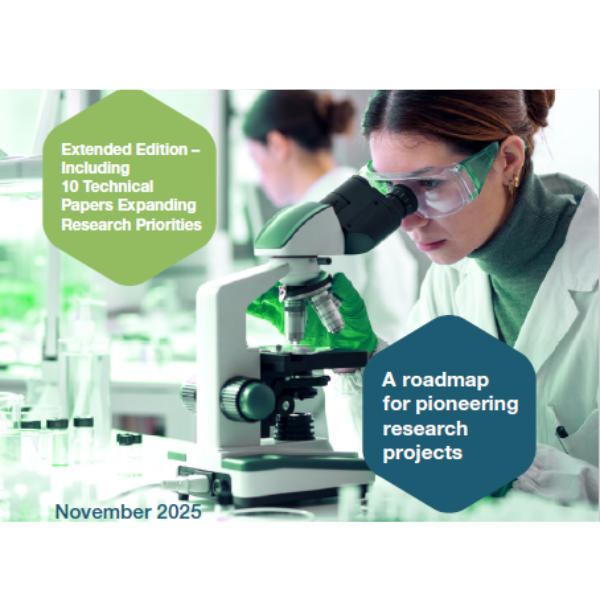
Last year, the Low TRL Research Working Group, together with input from our Executive Board and wider membership, published a comprehensive overview of emerging research topics across the hydrogen value chain. While the initial publication offered a broad strategic perspective, its scope limited the level of detail for each topic.
The extended edition addresses this by providing in-depth analyses of selected areas. Ten topics have now been expanded into standalone position papers, offering detailed insights into the state of the art and the remaining scientific and technical challenges. These papers are included in the appendix of the publication.
With these additions, “Advancing Hydrogen Technologies” now combines a forward-looking research vision with rigorous technical content.
You can find the individual papers listed below.
- Alternative hydrogen production processes
- Compatibility of polymer-based materials for the hydrogen transport infrastructure
- Innovative materials for low-pressure hydrogen storage
- Explosion-free in any fire self-venting (TPRD-less) composite tanks: fundamentals and manufacturing guidance
- The Role of Low-Carbon Hydrogen in Decarbonizing Glass and Ceramic Manufacturing in Europe
- Challenges in Manufacturing Structurally Stable Ceramic Membranes
- From Detection to Substitution: Scientific Challenges of PFAS in Hydrogen Technologies
- Non-Conventional and Advanced Sustainable Manufacturing Technologies for Fuel and Electrolytic Cells
- Development of IGF Code for hydrogen: Providing comprehensive scientifically based safety recommendations for maritime applications
- Research and Technology Infrastructures
As our President Luigi Crema said, “With this extended edition, we not only provide an overview of hydrogen technologies, but we also outline the future research routes needed to ensure that Europe remains at the forefront. Our goal is clear: to maintain strong support for research, strengthen coordination between institutions, Member States and industry, and preserve European leadership in this strategic sector. This document is a call to act with vision and responsibility – to turn scientific excellence into industrial competitiveness, possibly ring fenced by a future Clean Hydrogen Partnership 2.0.”
Together, these papers form a coherent technical roadmap for the future of hydrogen research and innovation in Europe.